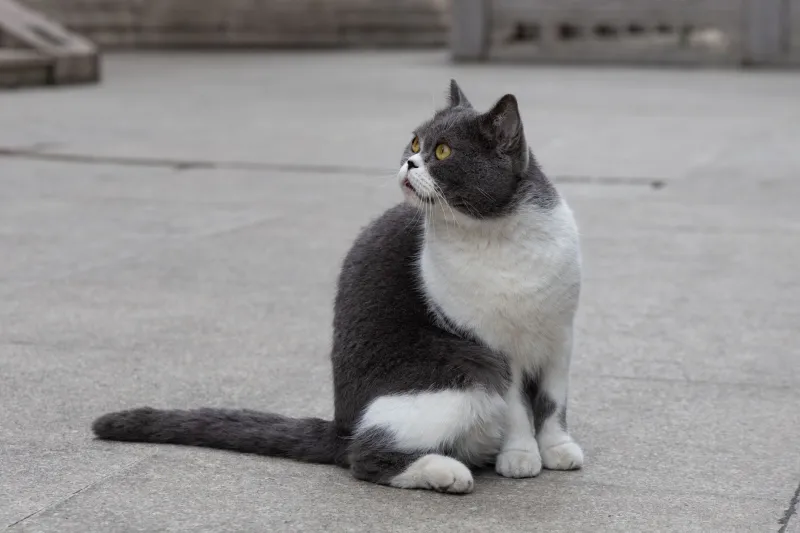
3 AM Cat Screaming, Decoded: A Sleep-Deprived Owner's Translation Guide

Photo by Photo by Luiza Braun on Unsplash on Unsplash
At some point in your life as a cat parent, you will be jolted awake at an ungodly hour by a sound that makes you question whether you accidentally adopted a small demon. You will stumble out of bed, eyes half-open, only to find your cat sitting in the hallway — perfectly fine, fully alert, and staring at you with the energy of someone who has had eight hours of sleep and two espressos.
Welcome to the midnight monologue. Population: every cat owner who thought 'cats are low-maintenance.'
Here's the thing though: your cat is actually communicating something. It might be urgent. It might be completely unhinged. But it's not random — and once you learn to decode the different types of cat vocalizations, you'll at least know whether to panic, intervene, or simply put in earplugs and go back to sleep.
First, Some Quick Cat Vocal Anatomy
Cats are uniquely weird in the animal kingdom because they developed meowing almost specifically to communicate with humans. Feral cats and wild felines rarely meow at each other as adults — they use body language, scent, and the occasional hiss. But domestic cats figured out early on that humans respond to vocalization, so they essentially evolved a whole language aimed at us.
This means every meow, yowl, chirp, and midnight scream is targeted communication. Your cat is not just making noise. She's sending a message — and it's time you learned to read the mail.
The Midnight Vocalization Decoder Ring
The Short, Repetitive Chirp-Meow
Sounds like: "Mrrp? Mrrp? Mrrp?" What you think it means: She's broken. Something is wrong. She needs a vet. What it actually means: She's bored and has identified you as a source of entertainment.
This is the 3 AM equivalent of a text that just says "hey." Your cat is awake because cats are crepuscular — naturally most active at dawn and dusk, which your sleep schedule has inconveniently interrupted. She's not in distress. She just noticed you were unconscious and decided that was a waste of your time.
What to do: Ignore it if you can. Engaging — even to tell her to stop — teaches her that vocalization gets your attention, which is exactly what she wanted. If this is a nightly pattern, try a puzzle feeder or an automated laser toy on a timer to redirect that energy before bedtime.
The Long, Drawn-Out Yowl
Sounds like: A foghorn crossed with a grief counselor. What you think it means: She is actively dying. What it actually means: Depends heavily on age and whether she's spayed.
This one actually warrants attention. Prolonged, low yowling in cats — especially those over 10 years old — can be a sign of cognitive dysfunction (yes, cats get something similar to dementia), hyperthyroidism, or high blood pressure. In unspayed females, it's almost certainly heat-related, in which case the solution is a vet visit and a spay appointment.
In younger, healthy, spayed or neutered cats, the yowl can also be triggered by seeing another animal outside, territorial stress, or simply discovering that the hallway has excellent acoustics at 2 AM.
What to do: If this is new behavior in a senior cat, call your vet. If it's a recurring, non-medical yowl, check for triggers — outdoor cats visible through windows, unfamiliar sounds, or changes in your household routine.
The Trill-and-Chirp at the Window
Sounds like: A bird trying to learn Morse code. What you think it means: She's happy? She's talking to birds? What it actually means: She is absolutely feral with predatory excitement and the glass is the only thing standing between her and chaos.
The chirp — that rapid, stuttering sound cats make when watching birds or squirrels — is thought to be either an involuntary response to predatory excitement or a mimicry behavior. Either way, it's pure instinct, and it's actually one of the more charming midnight sounds on this list.
What to do: Nothing, honestly. This one's harmless. Maybe close the blinds if the street lights are attracting moths that are attracting your cat's attention at 4 AM.
The Full-Volume Scream From Another Room
Sounds like: You accidentally stepped on her tail, except you are in bed and she is in the kitchen. What you think it means: There is an intruder. Your cat is being abducted. What it actually means: She dropped her toy under the refrigerator.
This is perhaps the most emotionally destabilizing entry on this list. The scream of a cat who has lost a toy is indistinguishable, to the human ear, from a cat in genuine emergency. You will sprint to the kitchen. You will find her staring under the refrigerator. You will fish out a crinkle ball at 3 AM in your pajamas. This is your life now.
What to do: Pick up toys before bed. Keep a few extras in accessible spots. Accept that this will happen again.
The Soft, Persistent Meow Right Next to Your Face
Sounds like: "Mew. Mew. Mew. Mew." What you think it means: She loves you and wants cuddles. What it actually means: She wants food, and she has correctly identified your face as the control panel.
This is targeted, calculated behavior. Your cat has learned that your face is where decisions come from, and she is applying gentle but relentless pressure to that decision-making center until you get up and fill the bowl.
What to do: An automatic feeder with a scheduled overnight or early morning portion can be genuinely life-changing here. Cats who know food is coming at 5 AM from a machine tend to redirect their lobbying efforts toward the machine instead of your eyelids.
The Dramatic Performer Hall of Fame
If we're being honest about which cats are the most catastrophically theatrical at midnight, certain types consistently top the charts:
🥇 Siamese and Oriental breeds — genetically wired to be loud, opinionated, and emotionally expressive. If you have a Siamese, you didn't adopt a cat. You adopted a roommate who has opinions about everything.
🥈 Senior cats experiencing cognitive changes — not their fault, genuinely needs vet attention, but the nighttime vocalizations can be intense and disorienting for everyone involved.
🥉 Recently adopted cats still adjusting — stress vocalizations are common in the first few weeks. Give them time, safe spaces, and patience.
When to Actually Call the Vet
Most midnight noise is behavioral. But call your vet if the vocalizations are:
- New and sudden in an older cat
- Accompanied by changes in eating, drinking, or litter box habits
- Combined with apparent confusion or disorientation
- Happening alongside visible physical discomfort
Your cat is talking to you every single night. Most of what she's saying is "I'm bored" or "feed me" or "there is a moth and I require your immediate attention." But occasionally, the midnight monologue is her way of telling you something actually matters.
Learn the difference. Sleep better. And maybe invest in a white noise machine.